
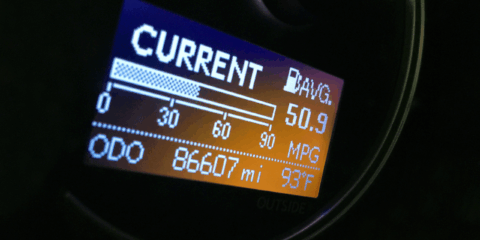

When you’re shopping around for a car, one of the first figures you’ll often see is MPG. It’s typically quoted in adverts and highlighted in reviews as a shorthand for how economical a vehicle is. But what is a good MPG for a car, really? And how much does it matter in everyday driving?
MPG (miles per gallon) plays a major role in your car’s running costs. It directly affects how much you spend on fuel each month. Especially as fuel prices (both diesel and petrol) fluctuate.
There’s no one-size-fits-all number for what constitutes a ‘good’ MPG. It depends on the type of car you drive and how you use that car (your motoring habits), as well as whether you’re looking at official figures or ‘real-world’ results.
If this sounds confusing, don’t panic. This guide explains MPG in plain English. We’ll cut through common misconceptions, helping you understand what good MPG actually looks like in real life so you can make smarter, more confident decisions, whether you’re buying or running a car.
What does MPG actually mean?
There’s a lot of jargon when it comes to cars, and MPG is one of the most frequently used acronyms.
MPG stands for miles per gallon. Put simply, it tells you how many miles a car can travel using just one gallon of fuel.
The higher the MPG of a car, the less fuel you use, and the less you spend at the pump over time.
So, for example, a car that achieves 50 MPG can travel 50 miles on a single gallon of fuel. A car that achieves 30 MPG will use more fuel to cover the same distance, so it will be more expensive to run.
MPG matters because fuel is one of the biggest ongoing costs of owning a car. Even a difference of 5 to 10 MPG can add up to significant fuel savings over time, depending on how much you drive.
In the UK, MPG figures are calculated using standardised tests carried out in controlled conditions. These tests provide a useful comparison between cars, but they don’t always reflect how vehicles perform on real roads (we’ll discuss this in greater detail later in this guide).
How many miles to the gallon does my car cover?
Your car’s MPG can change from week to week. Even if two people drive the same car, they may see very different results.
This is because your MPG is influenced by:
- Driving style – Aggressive acceleration and heavy braking use more fuel.
- Journey length – Short trips often reduce MPG.
- Road type – City driving is usually less efficient than motorway driving.
This combination of factors means that many drivers can find that their real-world MPG is lower than the advertised figure.
If you want a clear picture of the MPG your car actually achieves, it’s worth tracking it yourself over time rather than relying solely on manufacturer numbers.
How to calculate MPG
Calculating your car’s own MPG manually can give you a more accurate idea of your real-world fuel use.
Plus, it’s also simpler than it sounds. You’ll just need the following:
- The number of miles driven
- The amount of fuel used (in gallons)
Once you’ve established the above, you can calculate your MPG in the following way:
- Fill your car’s fuel tank and reset your trip counter.
- Drive as normal.
- Fill the tank again and note how many miles you’ve driven.
- Divide miles driven by gallons used.
For example, if you’ve driven 300 miles and used 10 gallons of fuel, your equation will be: 300 miles ÷ 10 gallons = 30 MPG.
If maths isn’t your idea of fun, many modern cars include onboard trip computers that calculate MPG automatically. There are also some smartphone apps that track fuel usage over time, which can be helpful for spotting your driving patterns and any changes.
What is considered good MPG in the UK?
There’s no universal answer to this. However, the following figures are useful as guideline benchmarks for cars in the UK and beyond:
- Below 30 MPG – Poor
- 30-40 MPG – Average
- 40-50 MPG – Good
- 50-60 MPG – Very good
- 60+ MPG – Excellent
However, the context of these figures is crucial. A large SUV achieving 40 MPG may be considered efficient for its size, while a small hatchback returning the same figure could be underperforming.
If you’re shopping around for a new car and trying to compare which model and make has the best MPG, it’s best to compare MPG within the same vehicle class and engine type.
What is a good MPG for a petrol car?
Petrol cars are common in the UK and tend to perform best for short trips and mixed driving.
There’s no one answer to the question of what is a good MPG for a petrol car. With that said, typical petrol MPG ranges are as follows:
- Small petrol cars: 45-60 MPG
- Medium petrol cars: 35-50 MPG
- Larger petrol cars: 25-40 MPG
Petrol cars are especially popular with urban drivers or motorists making shorter journeys because their engines warm up quickly. In terms of MPG, this means that a petrol car can sometimes return similar or better MPG than a diesel engine in stop-start traffic.
If most of your driving is around town or you tend to make shorter trips, a petrol car with a mid-to-high 40s MPG is generally considered good.
What is a good MPG for a diesel car?
Diesel cars are known for their fuel efficiency, particularly on longer journeys. They’re most efficient when driven at a steady speed, which is why they’re ideal for motorway driving or motorists who regularly make high-mileage trips.
However, diesel cars lose their fuel efficiency when they’re mainly used for short stop-start trips (as with traffic-heavy city driving).
Typical diesel MPG ranges are:
- Small diesel cars: 55-70 MPG
- Medium diesel cars: 45-65 MPG
- Larger diesel cars: 40-55 MPG
If you’re a frequent motorway driver, a diesel engine above 55 MPG is generally considered very good.
What is a good MPG for a used car?
By virtue of not being brand new vehicles, used cars often return lower MPG than their official figures.
If your used vehicle is returning a lower MPG than its advertised figure, this is completely normal.
In fact, a used car achieving 5 to 10 MPG less than official stats can still be performing well. More important is whether the MPG is consistent and reasonable for the car’s age and type.
Factors that affect used car MPG include:
- Age – Older engines are usually less efficient.
- Mileage – Vehicle wear and tear from excessive mileage can reduce fuel efficiency.
- Maintenance – Neglected servicing and vehicle maintenance will impact its fuel economy.
If you’re looking to purchase a used car and are using MPG as a comparative metric, it’s sensible to have realistic expectations, rather than looking at headline numbers.
City driving vs motorway driving MPG
You might not think it, but where and how you drive has a huge impact on your car’s MPG.
If you’re a city driver, you’ll frequently be stopping and starting, remaining (mostly) in lower gears over shorter journeys. As such, you’ll have a lower overall MPG.
By contrast, motorway driving means a warm engine operating in higher gears at steadier driving speeds. This means you’ll have a higher MPG when motorway driving.
In fact, motorway MPG often comes closer to official, advertised figures. City driving, on the other hand, typically results in lower real-world MPG, especially if you’re mostly making short trips.
Why official MPG figures don’t always match real life
Official MPG figures are produced using laboratory tests designed to create consistent comparisons between vehicles. While these tests are useful as standardised metrics, they don’t reflect the realities of everyday driving.
The current testing standard (WLTP) is more realistic than older methods, but it still can’t account for real-world variables.
These variables will depend on your driving habits and tendencies, but they can include traffic, weather conditions, road conditions and vehicle weight (which fluctuates with passengers and luggage).
It’s this variability that means many drivers see lower MPG in day-to-day use than advertised figures would suggest.
How driving habits affect your MPG
Your driving style can make a noticeable difference to your car’s fuel consumption and MPG.
Key factors that impact your MPG include:
- Acceleration and braking – If you brake frequently and aren’t smooth with your acceleration, you’re going to waste more fuel.
- Speed – Driving faster than necessary increases your fuel consumption.
- Gear selection – Staying in lower gears reduces MPG (this is why city driving frequently translates to lower MPG).
- Vehicle load – Carrying passengers and luggage uses more fuel.
- Tyre pressure – Underinflated tyres increase resistance, translating to more fuel usage.
- Servicing – A poorly maintained engine is less efficient, so it’s sensible to maintain your car properly.
Tips for improving your car’s MPG
If your car’s MPG isn’t great, don’t panic. There are achievable ways to improve your MPG over time:
- Accelerate smoothly and anticipate traffic to avoid heavy braking and excessive fuel usage. Maintaining steady speeds where possible can also improve your MPG.
- Check tyre pressures regularly. As detailed above, underinflated tyres translate to more fuel usage.
- Removing any unnecessary weight from your vehicle (for example, anything in the boot or foot wells) makes the car lighter, which translates to less fuel use and a better overall MPG.
- Keep up with routine servicing, because a well-maintained car is going to run better overall.
Although these steps won’t turn a low-MPG car into a high-MPG one overnight, they can lead to meaningful savings over time.
Most fuel efficient cars on the market
The fuel efficiency of a car will vary widely between makes and models. However, there are general fuel efficiency patterns you can expect of different engines.
Small petrol cars are more efficient if you’re a city driver making regular stop-start, short journeys. On the other hand, if you regularly drive long motorway journeys or have a high annual mileage, diesel models are more fuel efficient.
You can also choose a hybrid car. These perform especially well in cities, as they use electric power at lower speeds, offering more fuel savings and a better overall MPG.
The most fuel-efficient car for you isn’t necessarily the one with the highest MPG figure. It’s more important to account for how and where you drive.
Is higher MPG always better?
As we’ve emphasised in this article, there’s no standard answer to the question of what’s a good MPG. It’s all about your driving needs and habits.
A vehicle with a higher advertised MPG may seem more appealing on paper, but a car’s MPG shouldn’t be the only factor in your decision.
Factors like insurance costs, maintenance and repair expenses and higher purchase prices can all impact whether a car is most suitable (and most affordable) for you.
Sometimes, a slightly lower MPG car with cheaper servicing and insurance can be more appropriate for your budget.
Rather than looking at MPG as an isolated figure, you should look at the total running cost of a car to decide whether it’s right for you.
Using MPG to choose the right car
If you do want to use MPG to choose your next drive, you need to be realistic and consider your driving habits and needs.
What kind of driver are you? Do you need the car for city driving, or are you a commuter after something that’ll deliver more fuel efficiency over longer mileage? Alternatively, would a mixed-use vehicle better suit?
Matching your car to your driving habits means you’re more likely to find a vehicle that works for your needs. Don’t forget to compare similar makes and models, too.
Remember that you should always consider a car’s MPG alongside other expenses. Fuel costs are a major outgoing of vehicle ownership. But maintenance, insurance, and finance payments can also impact its overall affordability
Final thoughts on what makes good MPG
A good MPG figure is relative. It depends on the car, the driver and how the vehicle is used.
As such, when shopping for your next set of wheels, you should focus on what’s realistic, sustainable and most cost effective for your situation, rather than chasing the highest MPG on the market.
By understanding MPG (and its limitations) better, you’ll be in a stronger position to wisely and budget-confidently choose your next car.
MPG FAQs
What MPG is considered good for everyday driving?
Different drivers have different motoring habits and needs. These will determine what MPG is best for them. As a general rule, however, an MPG of 40-50 is considered good for everyday use.
Is 40 MPG good for a used car?
Depending on the car’s size, age and engine, 40 MPG for a used vehicle can be perfectly respectable.
Do diesel cars always return better MPG than petrol?
Diesel cars perform best on long journeys, and will therefore return a better MPG than petrol cars driving the same mileage. However, petrol vehicles are generally more efficient (with a preferable MPG) for short and stop-start trips.
Why is my real MPG lower than advertised?
Advertised MPG figures are based on ideal testing conditions in a laboratory. They don’t reflect everyday driving. As such, an official MPG can serve as a helpful guide, but you should always be realistic about a car’s ‘real-world’ performance.
Does motorway driving improve MPG?
Steady driving speeds and higher gears usually result in better MPG. Smooth acceleration and braking can also return a better MPG, too.
How much difference does MPG make to fuel costs?
A difference of even 5 MPG can add up to significant fuel savings over time for high-mileage drivers. If your MPG is lower than you’d like, changing your driving habits can help to make changes over time.
Can driving style really improve MPG?
Smooth, anticipatory driving and good vehicle maintenance can make a noticeable difference to your car’s MPG, as will choosing the right engine for your driving needs.
Should MPG influence my next car choice?
MPG is a helpful number to account for when choosing your next car, but it shouldn’t be the only thing. Always consider other expenses like insurance, maintenance and car finance before deciding on your next drive.
Rates from 9.9% APR. Representative APR 10.9%
Evolution Funding Ltd T/A My Car Credit


Require more help?
Got a question you can’t find the answer to, or need some advice and guidance around taking out car finance? Our Car Credit Specialists are friendly, experienced, and here to help so get in touch today!